Lung Cancer Treatment Decisions: Surgery, Chemotherapy, Radiation, and Immunotherapy - When to Seek a Specialist's Second Opinion
Facing a lung cancer diagnosis means making complex treatment decisions quickly. This guide explains your main treatment options and when a specialist second opinion may help you choose the right path.

Updated on Jul 17, 2026

When a Diagnosis Brings Too Many Choices
A lung cancer diagnosis often comes with many decisions. Your doctor may recommend surgery, radiation, chemotherapy, immunotherapy, or a combination of these treatments. Each has benefits. Each has risks. And each choice may shape your daily life for months or years to come.
Many patients feel rushed to decide quickly. Most specialists agree it's worth taking time to understand your options. Getting a second opinion from a lung cancer specialist before treatment starts shows careful thinking, not doubt.
This article covers the main treatment options for lung cancer. It explains what each approach involves and why many patients seek a specialist second opinion - and how to do so quickly.
Understanding Lung Cancer: Types and Stages
Lung cancer is commonly diagnosed worldwide. The American Cancer Society reports that lung cancer is the second most common cancer in both men and women and the leading cause of cancer death.
There are two main types:
- Non-small cell lung cancer (NSCLC) - The most common type, accounting for about 80 to 85 percent of all cases. This includes adenocarcinoma, squamous cell carcinoma, and large cell carcinoma.
- Small cell lung cancer (SCLC) - A faster-growing type that tends to spread quickly. It makes up about 13 to 15 percent of cases.
The type and stage of your cancer are the two most important factors in determining your treatment plan. Stage describes how far the cancer has grown and whether it has spread to lymph nodes or other parts of the body. Early-stage cancers may be treated with surgery alone. Later stages often require multiple treatments.
Molecular testing - also called biomarker testing or genomic testing - is an important step for most NSCLC patients. This testing looks for specific gene mutations in the tumor. The results help your team choose which treatments are most likely to work for your cancer.
The Main Treatment Options for Lung Cancer
The National Cancer Institute outlines several standard treatment approaches for lung cancer. Most treatment plans combine approaches based on your cancer type, stage, overall health, and test results.
Surgery
Surgery removes the tumor and nearby tissue. For early-stage NSCLC, surgery is often the first treatment. The most common procedure is a lobectomy - the removal of one lobe of the lung. Some patients need a wedge resection (a smaller section of lung tissue removed) or, in rare cases, pneumonectomy (removal of an entire lung).
Many surgeons now use minimally invasive techniques such as video-assisted thoracic surgery (VATS) or robotic-assisted surgery. These approaches reduce recovery time and discomfort compared to open chest surgery.
Not everyone is a candidate for surgery. Your lung function, heart health, and the exact location of the tumor all affect whether surgery is safe and practical for you.
Chemotherapy
Chemotherapy uses drugs that target fast-growing cells, including cancer cells. In lung cancer, chemotherapy may be used before surgery to shrink a tumor, after surgery to lower the risk of recurrence, with radiation for locally advanced disease, or as the main treatment for advanced lung cancer.
Side effects vary by drug and individual. Common effects include fatigue, nausea, and nerve-related symptoms - such as numbness or tingling in the hands and feet.
Radiation Therapy
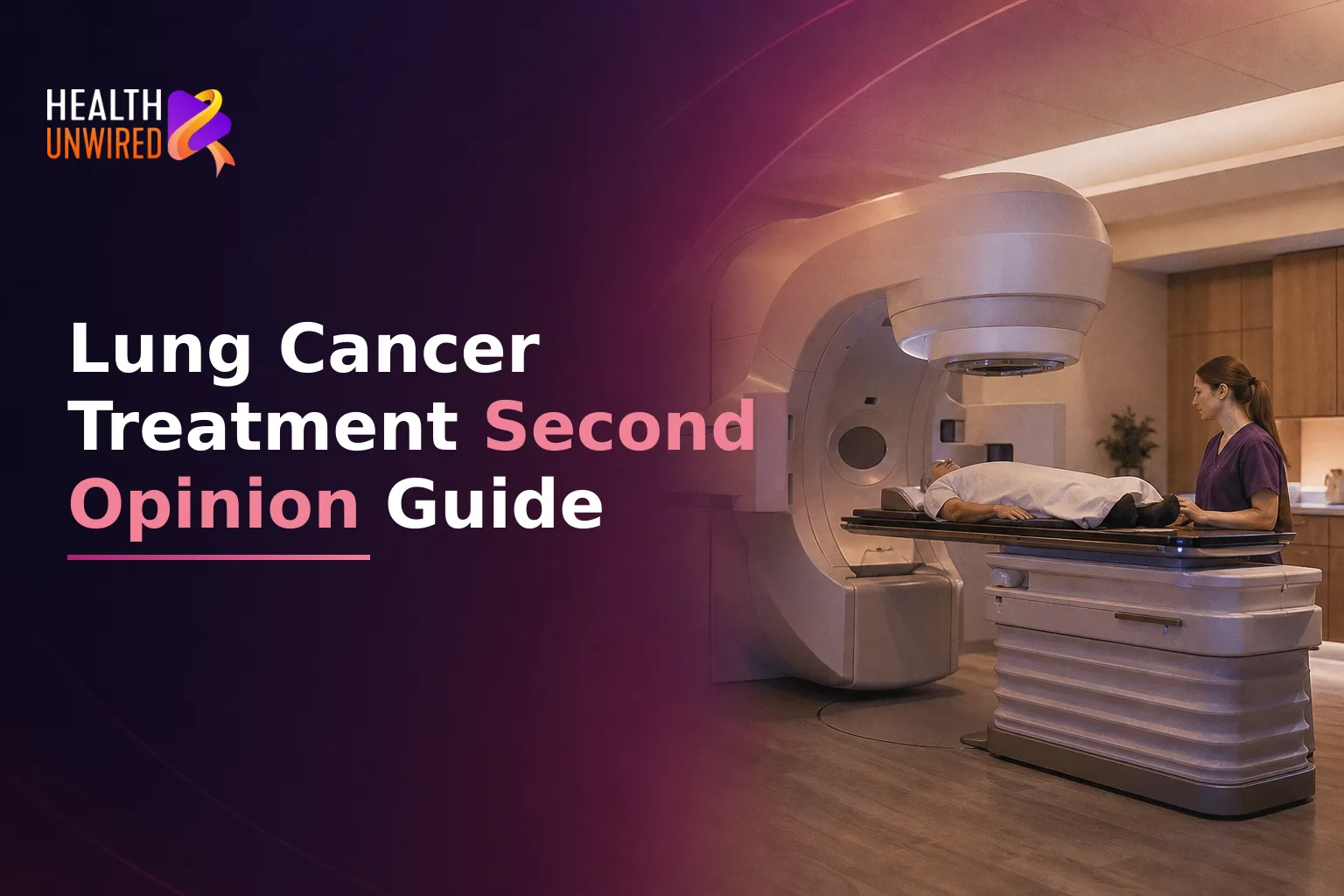
Radiation uses high-energy beams to destroy cancer cells. For lung cancer, it may be the main treatment for patients who cannot have surgery, used with chemotherapy for locally advanced NSCLC, given before or after surgery to reduce recurrence, or used to relieve symptoms from advanced disease such as pain or breathing problems.
Stereotactic body radiation therapy (SBRT) is a newer, precise form of radiation. It is often an option for small tumors in patients who are not well enough for surgery.
Immunotherapy
Immunotherapy works by helping your immune system recognize and attack cancer cells. A class of drugs called checkpoint inhibitors is now widely used in lung cancer treatment.
Research presented at the 2025 American Society of Clinical Oncology (ASCO) annual meeting showed growing evidence for using immunotherapy before and after lung cancer surgery, and with chemotherapy for advanced disease.
Immunotherapy does not work equally well for all patients. Doctors test for biomarkers - such as PD-L1 protein expression and tumor mutational burden - to help predict who may respond. Your team will use these results to decide whether immunotherapy is an option for you.
Targeted Therapy
Targeted therapies are drugs designed to block specific genetic changes that drive cancer growth. For NSCLC, common mutation targets include EGFR, ALK, ROS1, KRAS, and BRAF. If your tumor carries one of these mutations, a targeted therapy may work better than standard chemotherapy.
This is why biomarker testing matters so much in lung cancer care. Without it, your team may not know whether a targeted drug is an option for you.
Questions Patients Commonly Ask Before Choosing a Treatment
When patients meet with their oncologist after a lung cancer diagnosis, certain questions come up often. Here are some of the most common:
- Has my tumor been tested for genetic mutations?
- Should I have surgery now, or try to shrink the tumor first?
- Is immunotherapy an option for me, and how will we know if it is working?
- What is the chance the cancer returns after treatment?
- Am I eligible for any clinical trials?
- What does my daily life look like during and after treatment?
These are not easy questions. The answers depend on details specific to your case. That is exactly why a second opinion from a specialist who focuses on lung cancer can be so valuable.
Why So Many Patients Seek a Specialist Second Opinion
A second opinion shows you want to feel confident before committing to a major treatment path. In cancer care, that confidence is not a luxury - it is part of making a good decision.
The American Cancer Society notes that any cancer patient may benefit from seeking a second opinion before treatment begins.
Research from Memorial Sloan Kettering Cancer Center found that about 1 in 3 patients who sought a second opinion had a change in their recommended treatment - most often to a less intensive approach. About 1 in 5 patients were recommended less surgery, or no surgery at all, compared to what was originally planned.
For lung cancer patients, a specialist second opinion may reveal:
- More accurate staging of the disease
- Eligibility for clinical trials or newer treatments not available locally
- A different surgical approach with a lower risk profile
- Molecular testing that was not initially ordered but could identify a targeted therapy
- A change in the combination or timing of chemotherapy and radiation
Each of these findings can meaningfully affect the direction of your care.
How Online Oncology Consultations Work
Getting a second opinion once meant traveling to another city or country. Online oncology consultations have changed that. Today, patients anywhere in the world can connect with a leading cancer specialist and get a detailed review without leaving home.
Here is how the process typically works:
- Upload your reports - Share your pathology results, imaging scans, surgical notes, and current treatment plan before your appointment.
- Search for a specialist - Find a doctor whose expertise matches your cancer type and the specific question you need answered.
- Review the doctor's profile - Read about their training, clinical focus, and areas of experience.
- Book a paid consultation - Choose a time that works for you and confirm your appointment.
- Speak via video call - Meet with the specialist directly, ask your questions, and discuss your case in depth.
- Receive written recommendations - Get a summary of the specialist's review to share with your local care team.
The online consultation does not replace your existing oncologist. It adds another informed perspective to the decisions you and your team are already working through.
Benefits of Consulting a Lung Cancer Specialist Online
Patients who use online oncology consultation platforms often report several advantages:
- Access to specialists with deep experience in lung cancer, even when none practice nearby
- Faster access than waiting weeks for an in-person appointment at a major cancer center
- No travel costs or time away from family
- The ability to consult more than one specialist and compare perspectives
- A written report you can bring back to your local care team
- The potential to learn about clinical trials or newer treatments your team has not yet mentioned
For patients in regions where access to lung cancer specialists is limited, online consultations may offer expertise that geography alone would make hard to reach.
Preparing for Your Online Consultation
The more complete your documents, the more useful your consultation will be. Before your appointment, gather the following:
- Your pathology report from your biopsy (include any molecular or biomarker test results)
- Imaging reports - CT scan, PET scan, MRI, or chest X-ray
- Any surgical reports if you have already had a procedure
- A list of your current medications
- A short summary of your treatment history so far
- A written list of your questions - prepare these before the call so you don't forget any
When you upload documents through HealthUnwired, the specialist reviews them before your call. This means you spend your consultation time on your questions and concerns, not reading through records.
Next Steps After Your Consultation
After your online consultation, you will have a clearer picture of your options. Some patients find that their original treatment plan was already the best choice for them. That reassurance has real value. Others learn about a new option - a targeted therapy they were not tested for, a clinical trial they qualify for, a different surgical approach, or a change in the timing of chemotherapy.
Take the written summary back to your local oncologist. Most doctors welcome specialist second opinions, especially when they are backed by a detailed document review. Working together with your care team, you can move forward with a treatment decision that feels carefully considered.
Book Your Online Lung Cancer Consultation
A lung cancer diagnosis is serious. The decisions you make in the weeks ahead can have a lasting impact on your treatment, your recovery, and your quality of life. You can make those decisions with full understanding.
HealthUnwired connects patients worldwide with leading lung cancer specialists for online second opinions and treatment plan reviews. Whether you are weighing surgery against radiation, trying to understand a new immunotherapy recommendation, or wondering whether your tumor has been fully tested for relevant genetic mutations - a specialist review can bring the clarity you need.
Here is how to get started:
- Search for a lung cancer specialist on HealthUnwired
- Review their profile and areas of clinical expertise
- Upload your pathology report and imaging results
- Book your paid online consultation at a time that suits you
Your treatment decision deserves an expert second voice. Start your search today.
When to Talk to Your Doctor
Contact your oncology team right away if you notice new or worsening symptoms, feel unclear about your treatment plan, or are unsure whether your tumor has been tested for relevant genetic mutations. If you are considering stopping or changing treatment for any reason, always discuss this with your care team first.
This article is for general information and is not a substitute for medical advice. Always consult your oncologist or care team about your specific situation.
Frequently Asked Questions
Similar Topics

Pancreatic Cancer Caregiver: Managing Your Emotions
Caring for someone with pancreatic cancer takes a profound emotional toll. This guide helps caregivers recogn…
HealthUnwired Team
Jul 17, 2026

Eating Well When Lymphoma Treatment Changes Your Taste
Lymphoma treatment can change how food tastes and reduce your appetite. This guide shares practical, evidence…
HealthUnwired Team
Jul 17, 2026

Sexual Side Effects After Prostate Cancer Treatment: What to Expect and Ho…
Prostate cancer treatment can cause changes to erections, ejaculation, and sex drive. Learn what to expect an…
HealthUnwired Team
Jun 4, 2026